From Competition to Compassion
with Louwrien Wijers
Directors: Carsten Aniksdal & Petrine Vinje
Producer / Writer: Petrine Vinje
Cinematography / Editor: Carsten Aniksdal
Music: Mercedes Montemayor Elosúa
Sound Design: Christian Obermayer
Runtime: 50 minutes
Year: 2026
Countries: Norway, the Netherlands
Aspect Ratio: 16:9
Sound Format: Stereo 2.0
Format: DCP
Video Format: Digital
Language: English
Subtitles: available in English, Norwegian, German
Supported by: Arts Council Norway, Audiovisual Fund Norway, BKV - Visual Artist´s Renumenation Fund, OCA, Norwegian Filminstitute
2026
“Creativity has no shape, no form, no word. It is simply inspiration.”
At 85, Dutch artist and writer Louwrien Wijers looks back on a life spent exploring how art can reshape consciousness and society. From her home in Friesland, she reflects on a remarkable journey that brought her into deep dialogue with some of the twentieth century's most influential minds, including Joseph Beuys, Andy Warhol, John Cage, David Bohm, Marina Abramović, and the Dalai Lama.
Blending documentary observation, archival footage, and essayistic reflection, From Competition to Compassion is the first in-depth cinematic portrait of Wijers and her unique artistic practice. Emerging from journalism, the experimental worlds of Fluxus and conceptual art, her work grew out of conversations, encounters, and what she calls “mental sculptures”, artworks shaped through language, focused attention, and shifts in perception.
As the film moves between past and present, ideas that once seemed utopian suddenly feel urgent and necessary. Through Wijers’ life, the film traces unexpected connections between art, science, spirituality, and technology, asking how creativity can help us navigate a world fractured by polarization and rapid change.
From Competition to Compassion is both an intimate portrait and a meditation on dialogue, imagination, and compassion as genuine forces for cultural transformation. It presents Wijers' vision of a world without borders, where language is a central tool and art is a radical catalyst for change.
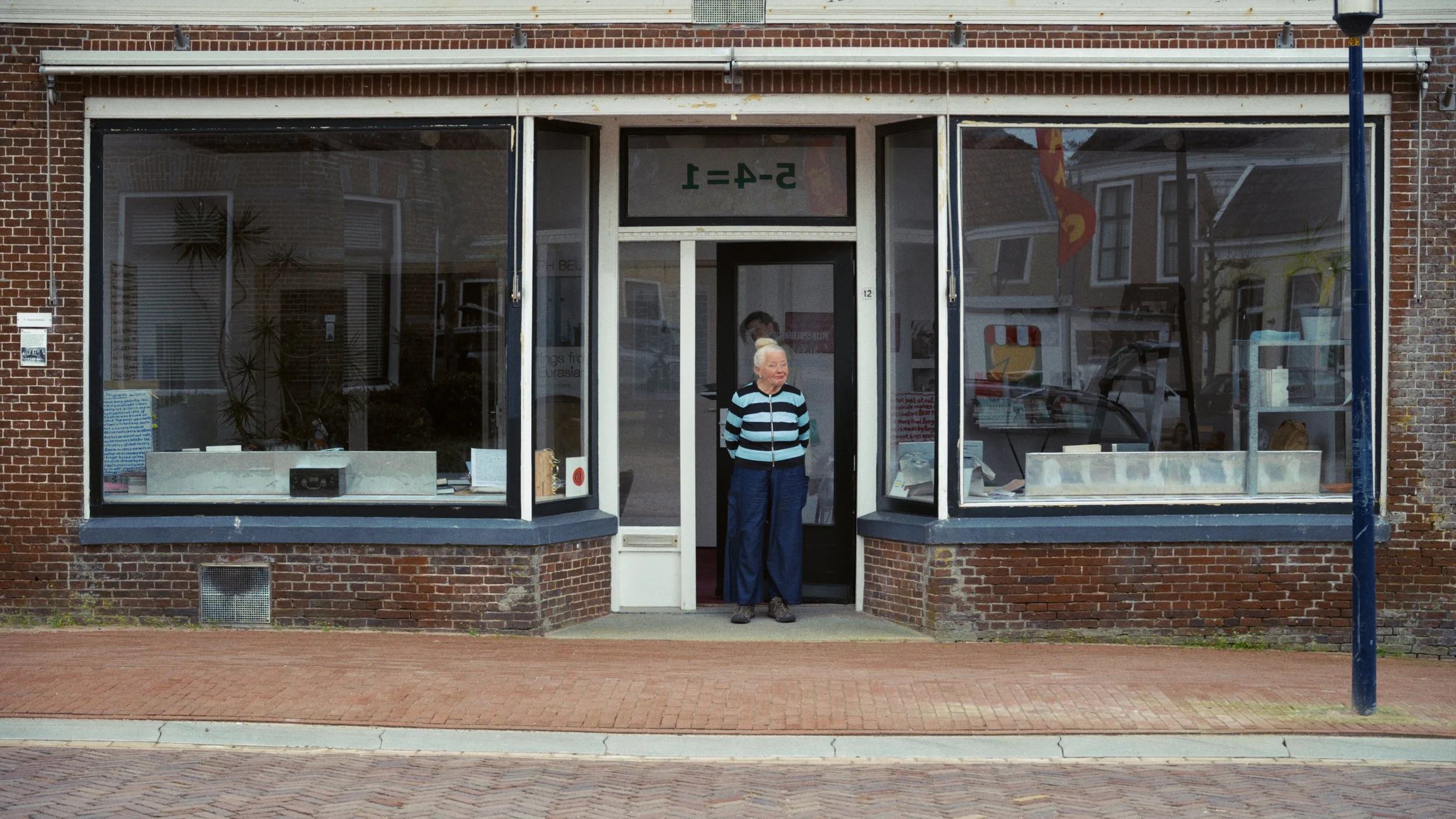
Who is in front?
Louwrien Wijers was born in Aalten in 1941, spending her earliest years in her family home during World War II. Now 85, she views her childhood experience of wartime societal collapse as foundational to her understanding of art. Living and working from Friesland, her international career has spanned London, Paris, New York, and Amsterdam. In 2026, she received the Gerrit Benner Prize, marked by her first retrospective at the Fries Museum in Leeuwarden.
Wijers’ artistic practice took root in 1964 after she encountered the Fluxus movement in Paris. Initially trained as a journalist and art critic, her trajectory developed through writing and sustained exchanges with key figures in the postwar European and American art scenes. From 1968 onward, she worked closely with Joseph Beuys, whose concept of "social sculpture" deeply informed her thinking.
Her home and studio in Amsterdam became a vibrant hub for artistic exchange, hosting figures like Lawrence Weiner, Marina Abramović, and Seth Siegelaub. Alongside running her studio-house as a collaborative platform, Wijers wrote extensively on art and spirituality. She published her unedited interviews with Beuys, the Dalai Lama, and others in self-published books, cementing dialogue and "mental sculpture" as her primary artistic mediums.
Her work in the 70s and 80s culminated in her most ambitious project: the 1990 conference Art Meets Science and Spirituality in a Changing Economy at the Stedelijk Museum. The event brought together artists (John Cage, Marina Abramović), scientists (David Bohm, Francisco Varela), and spiritual leaders (the Dalai Lama) to discuss the role of creativity in a fiercely competitive, capitalist society. It was from this historic gathering that Wijers’ central thesis emerged: the necessary shift “From Competition to Compassion”.
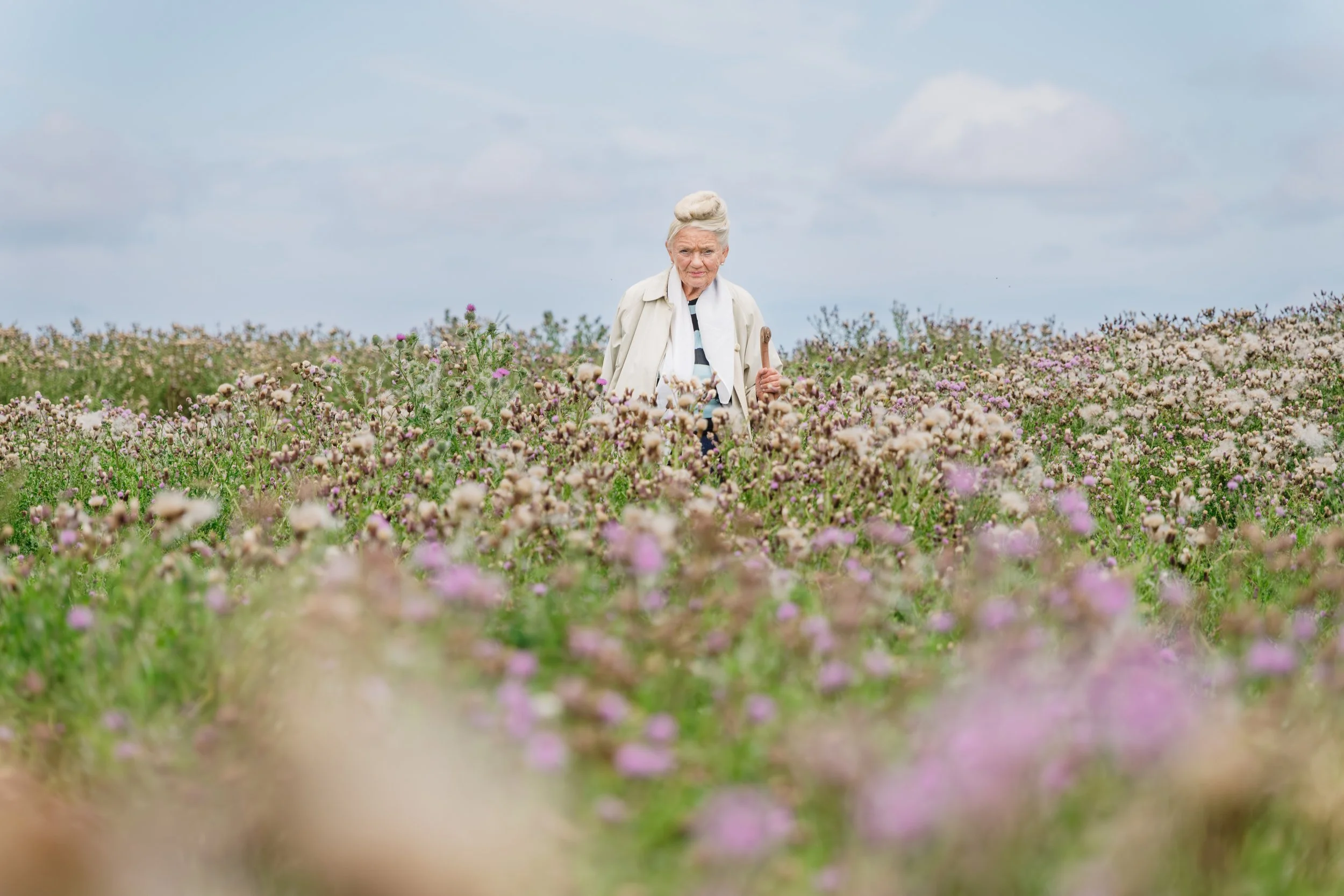
Directors note
We first encountered Louwrien Wijers through her writings. What immediately struck us wasn’t just the sheer scale of her artistic work, but the radical simplicity of the questions she keeps asking:
How do ideas shape the world? What role can art play in moments of crisis?
Can creativity move us beyond competition and toward compassion?
As artists, we recognized the very same questions that have guided our own work for years. Louwrien moves easily across territories that are usually kept strictly separate, art and science, spirituality and politics, personal experience and collective responsibility. Yet she approaches these complex ideas through lived encounters, conversation, and a stubborn belief in human imagination and creativity.
Over a few years, we visited Louwrien in Friesland, recording conversations that slowly became the bedrock of this film. What fascinated us most was the contrast between the historical weight of her work and the warmth, humor, and lightness with which she talks about it. While many of her peers became canonical figures, Louwrien has remained largely overlooked by history. We felt a strong pull to explore that absence and bring her voice into the present.
Rather than building a standard biographical documentary, we wanted to create a cinematic space that mirrors her actual practice. The film drifts between memory, archives, landscapes, and quiet reflection, letting ideas unfold through association rather than heavy explanation. The structure itself is inspired by Louwrien’s concept of the “mental sculpture”, a process where thought, perception, and dialogue become the raw materials for transformation. Today, as technological acceleration, ecological crises, and social fragmentation alter our daily lives, the questions Louwrien posed decades ago feel more pressing than ever. From Competition to Compassion is our attempt to listen closely to a remarkable artist, and to see what her vision still has to offer us.
Key themes
Mental Sculpture – Plasticity – Language – Compassion Abstraction – Peace – Technology – Creativity
At the core of Louwrien Wijers’ practice is the belief that consciousness itself can be an artistic medium. Inspired by Joseph Beuys, she developed her notion of the “mental sculpture”, artistic processes that take place entirely through dialogue, reflection, and internal shifts in perspective. The film connects this to philosopher Catherine Malabou’s concept of plasticity (the capacity to receive, create, and transform form), framing creativity not just as self-expression, but as an active tool for reshaping reality.
Compassion as Cultural Practice
The film’s title stems from Wijers’ landmark 1990 conference. By bringing artists, scientists, economists, and spiritual leaders to the same table, the project proposed compassion as a practical alternative cultural model. The film traces how this idea grew out of decades of artistic exchange and asks how it applies to our current political and ecological pressures.
The Artist as Catalyst
Instead of making physical objects, Wijers builds situations, conversations, and encounters. Her work challenges traditional ideas of authorship and production, positioning the artist as a catalyst for collective thought. The film highlights an influential artistic legacy that has quietly thrived outside mainstream art history narratives.
Language, Technology and the Future
Wijers views language as the medium that dictates how we perceive reality. Neorobiologist and cybernetician Fransisco Varela and Audrey Tang, the world`s first digital minister (Taiwan) have both been collaborative partners of Wijers. Looking at her artworks today, in the age of artificial intelligence and digital information networks, reveals striking connections between 20th-century conceptual art and current debates around technology, communication, and how we manufacture meaning.
The film invites viewers to consider how intent listening, dialogue, and imagination become even more vital in a rapidly shifting technological landscape.